
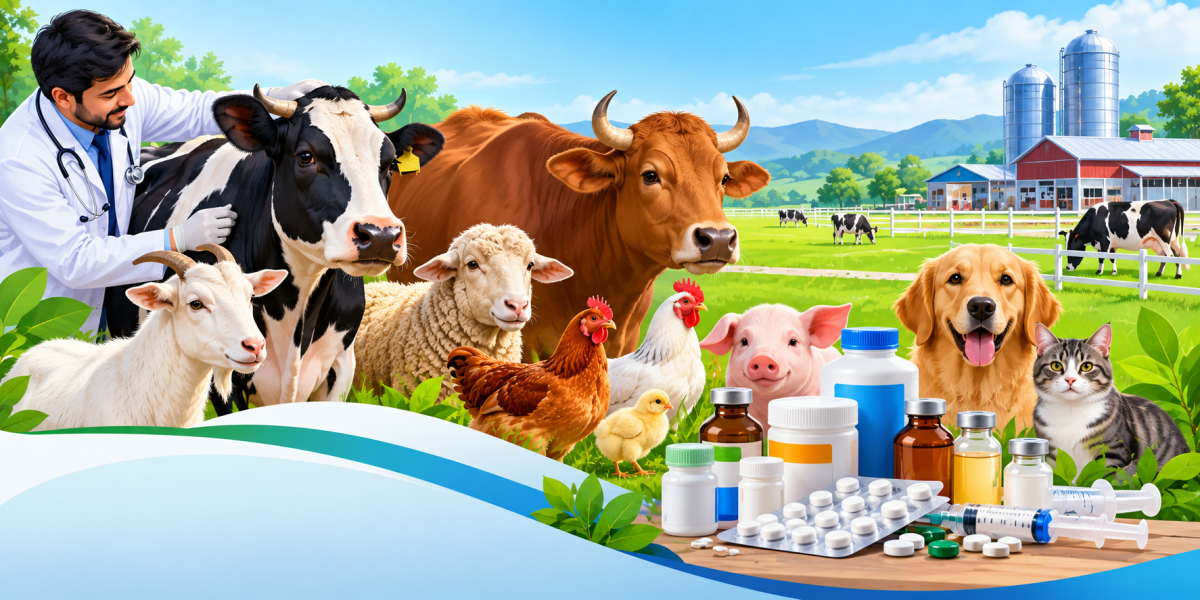
Healthy livestock are essential for successful dairy farming, poultry farming, goat farming, sheep farming, and other animal-based agricultural activities. Good animal health not only supports productivity but also contributes to better farm management and overall profitability.
Livestock medicines and veterinary healthcare products play an important role in preventing, managing, and treating various health conditions in farm animals. However, medicines should always be selected and administered responsibly, preferably under the guidance of a qualified veterinarian.
In this article, we explore the importance of livestock medicines, common categories of veterinary medicines, preventive healthcare practices, and how farmers can maintain better animal health.
What Are Livestock Medicines?
Livestock medicines are veterinary pharmaceutical products used for the healthcare of farm and production animals. Depending on the animal and health condition, veterinary medicines may be used to manage infections, parasites, nutritional deficiencies, inflammation, and other conditions.
Common livestock species requiring veterinary healthcare include:
- Cattle and dairy cows
- Buffaloes
- Goats
- Sheep
- Poultry
- Pigs
- Other farm and production animals
The appropriate medicine depends on the animal species, age, weight, health condition, diagnosis, and other factors. Therefore, veterinary advice is important before using medicines.
Why Are Livestock Medicines Important?
Animal diseases can affect the health and productivity of livestock and may result in significant losses for farmers. Timely veterinary care can help identify health problems early and reduce the risk of complications.
Reliable livestock medicines can support:
1. Disease Management
Veterinary medicines may be prescribed to manage bacterial, parasitic, inflammatory, and other health conditions affecting livestock.
2. Parasite Control
Internal and external parasites can negatively affect animal health, growth, nutrition, and productivity. Appropriate veterinary treatment and regular preventive programs can help manage parasite-related problems.
3. Nutritional Support
Veterinary healthcare programs may include appropriate vitamins, minerals, electrolytes, and other nutritional products when recommended by a veterinarian.
4. Better Animal Welfare
Timely diagnosis and appropriate treatment can help reduce suffering and support healthier animals.
5. Farm Productivity
Healthy animals are generally better positioned to maintain normal growth, reproduction, milk production, and other productive functions.
Common Categories of Livestock Medicines
The veterinary medicines required on a farm vary according to the animal species and local disease conditions. Some commonly encountered categories include:
Veterinary Antibiotics
Antibiotics may be prescribed by veterinarians for certain bacterial infections. They should not be used unnecessarily or without professional guidance, because inappropriate antibiotic use contributes to antimicrobial resistance.
Antiparasitic Medicines
These products are used to control certain internal and external parasites. Veterinary professionals can recommend an appropriate treatment based on the animal and parasite involved.
Anti-inflammatory & Pain Management Medicines
Certain veterinary medicines may be prescribed to manage inflammation and pain associated with specific health conditions.
Vitamins & Mineral Supplements
Livestock may require specific nutritional supplementation when dietary intake is inadequate or when recommended as part of veterinary care.
Electrolytes & Supportive Products
Electrolyte and supportive veterinary products may be useful in specific situations, particularly when animals experience conditions that affect fluid and electrolyte balance.
Vaccines
Vaccination is an important component of preventive animal healthcare. Vaccines help protect susceptible animals against specific infectious diseases and should be administered according to appropriate veterinary vaccination programs.
Livestock Medicines Should Be Used Responsibly
One of the most important principles of veterinary healthcare is responsible medicine use.
Farm owners should avoid choosing medicines solely based on previous experience or recommendations from unqualified sources. The correct treatment depends on the actual cause of the illness.
Before administering a veterinary medicine, important factors may include:
- Animal species
- Age and body weight
- Symptoms and clinical diagnosis
- Pregnancy or lactation status
- Existing health conditions
- Other medicines being used
- Recommended dosage and duration
- Withdrawal requirements for food-producing animals
Always follow the veterinarian's instructions and the product label.
Understanding Withdrawal Periods
Withdrawal periods are particularly important for food-producing animals.
After certain veterinary medicines are administered, a specified period may need to pass before products such as milk, meat, or eggs are suitable for human consumption, depending on the medicine and applicable regulations.
Farmers should carefully follow the recommended withdrawal period provided by the product information and veterinarian.
This is an important part of responsible livestock farming and food safety.
How to Store Livestock Medicines Properly
Correct storage helps maintain the quality and effectiveness of pharmaceutical products.
General good practices include:
- Follow the storage conditions specified on the product label.
- Protect medicines from excessive heat, moisture, and direct sunlight when required.
- Maintain recommended refrigeration conditions for products that require cold storage.
- Keep medicines away from children and animals unless they are being administered appropriately.
- Check expiry dates regularly.
- Keep medicines in their original packaging whenever possible.
- Maintain proper stock records for farm or business use.
Specific storage requirements vary between products, so always follow the manufacturer's instructions.
How Can Farmers Improve Livestock Healthcare?
Good livestock healthcare is not limited to medicines. A comprehensive approach should include:
Proper Nutrition
Provide balanced feed and adequate clean drinking water appropriate for the animal.
Clean Housing
Maintain hygienic, well-ventilated and suitable housing conditions.
Regular Veterinary Checkups
Regular professional examination can help identify health problems at an early stage.
Vaccination Programs
Follow appropriate vaccination schedules recommended by veterinary professionals.
Parasite Management
Implement suitable parasite-control practices based on veterinary recommendations.
Biosecurity
Reduce the risk of disease entering or spreading within the farm through appropriate hygiene and animal-management practices.
Responsible Medicine Use
Use veterinary medicines only when appropriate and according to professional advice.
Choosing a Reliable Veterinary Medicine Supplier
For farmers, veterinary pharmacies, distributors, and animal healthcare businesses, choosing a dependable supplier is important.
When evaluating a veterinary pharmaceutical supplier or livestock medicine wholesaler, consider:
- Product quality and authenticity
- Proper storage and handling
- Reliable product availability
- Appropriate documentation
- Professional customer service
- Regulatory compliance
- Efficient wholesale distribution
- Product information and support
A reliable supply chain helps veterinary medicines reach farms and animal healthcare professionals in suitable condition.
Sihil Pharma – Supporting Livestock & Animal Healthcare
Sihil Pharma is focused on the marketing and wholesale distribution of veterinary medicines, pet healthcare products, and animal healthcare solutions.
Our objective is to connect reliable veterinary pharmaceutical products with businesses and professionals involved in animal healthcare. We aim to build long-term relationships with veterinary professionals, pharmacies, distributors, retailers, pet businesses, livestock businesses, and institutional buyers.
With a focus on quality, reliability, and professional service, Sihil Pharma strives to contribute to a stronger and more dependable animal healthcare supply network.
Conclusion
Effective livestock healthcare requires more than simply treating animals when they become sick. A combination of preventive healthcare, proper nutrition, hygiene, vaccination, veterinary consultation, responsible medicine use, and reliable pharmaceutical supply can contribute to healthier and more productive livestock.
Whether you are a dairy farmer, goat farmer, sheep farmer, poultry business owner, veterinary professional, or animal healthcare distributor, maintaining access to quality veterinary healthcare products is an important part of responsible animal care.
Sihil Pharma is committed to supporting the veterinary and livestock healthcare ecosystem through quality-focused pharmaceutical marketing and wholesale distribution.
Frequently Asked Questions
What are livestock medicines?
Livestock medicines are veterinary pharmaceutical products used to prevent, manage, or treat health conditions in farm and production animals.
Can farmers use livestock medicines without consulting a veterinarian?
It is best to consult a qualified veterinarian before administering medicines, particularly antibiotics, prescription medicines, or medicines requiring specific dosage and withdrawal periods.
What animals require livestock medicines?
Cattle, buffaloes, goats, sheep, poultry, pigs, and other farm animals may require veterinary medicines depending on their health needs.
Why is responsible antibiotic use important in livestock?
Incorrect or unnecessary antibiotic use can contribute to antimicrobial resistance. Antibiotics should therefore be used only when appropriate and according to veterinary guidance.
Where can I source veterinary medicines in wholesale quantities?
Eligible veterinary pharmacies, distributors, retailers, livestock businesses, and other buyers can contact reliable veterinary pharmaceutical wholesalers such as Sihil Pharma to enquire about available products and supply options.